Caring for the Caregiver
Take Care of Yourself, Too
This article is for informational purposes only and explains caregiver stress in simple terms. It also gives easy steps you can try today, plus places to find help when caregiving feels too hard.
When you care for someone with an injury, illness, or long-term pain, most of your time and energy goes to them. That is natural. But your health matters, too.
When you are rested and supported, you can give better care. You are more patient, safer, and better able to help your loved one. Taking care of yourself is not selfish. It is an important part of being a caregiver.
Your Feelings Matter
Being a caregiver can be rewarding, but it can also be very hard. Some days you may feel happy and thankful. Other days you may feel tired, sad, angry, or frustrated. You may even feel all of these emotions in the same day.
These feelings do not mean you are a bad caregiver. They mean you are a person doing a difficult job.
Studies show that about 1 in 4 family caregivers feel burned out. If you feel overwhelmed, you are not alone. Many caregivers feel this way. Burnout happens when the stress of caregiving builds up over time.
Signs of Caregiver Burnout
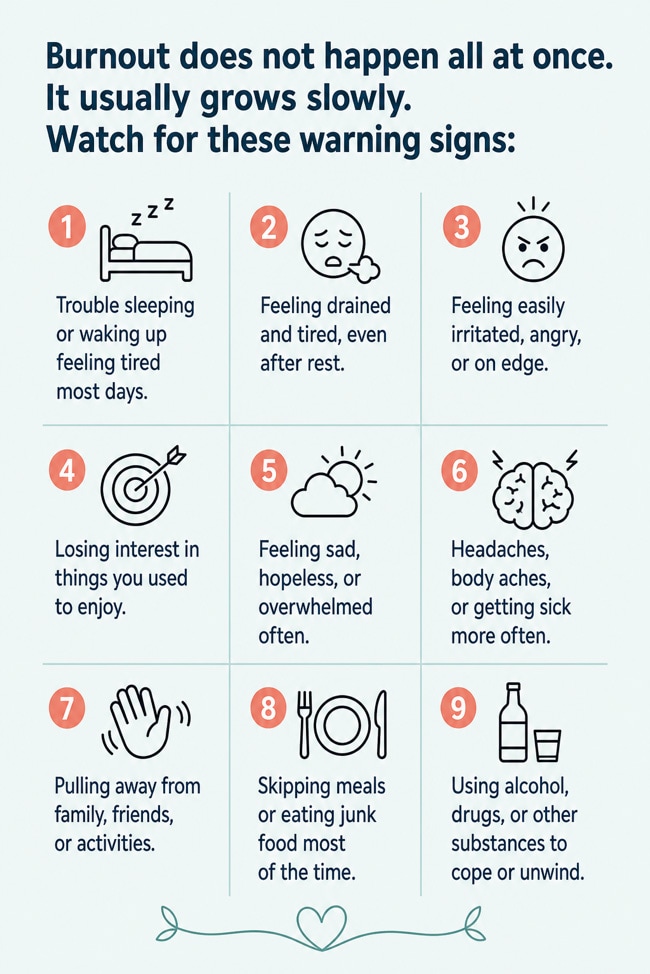
If you notice these signs, do not blame yourself. They are your body’s way of telling you that you need more support.
Ways to Prevent Burnout
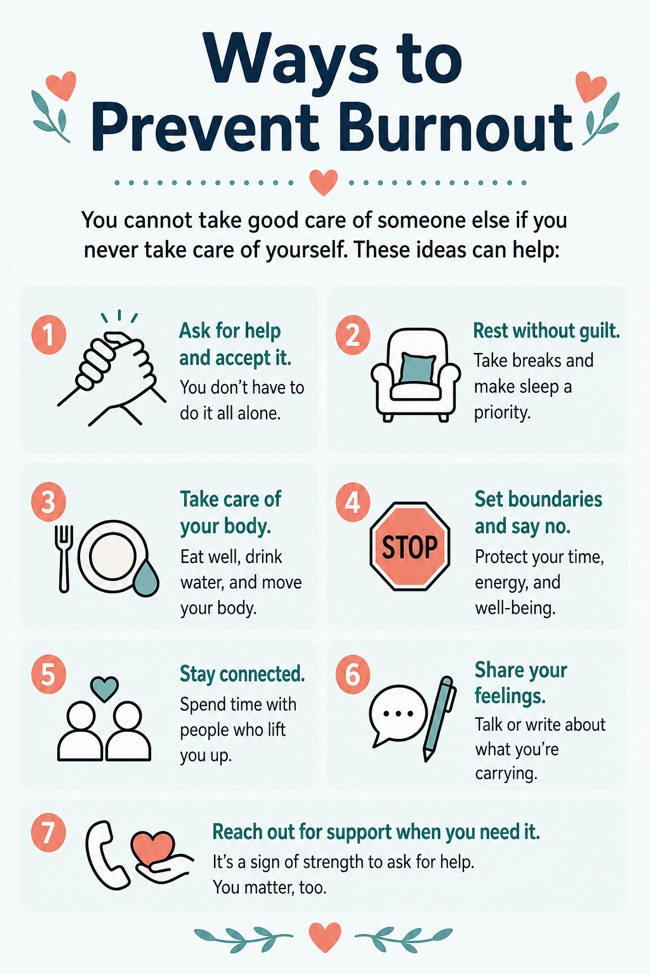
When to ask for more help: Talk with a doctor, counselor, or trusted support person if stress is affecting your sleep, health, safety, or daily life. You do not have to wait until things feel impossible.
If you are in a crisis or thinking about hurting yourself, call or text 988 to reach the nationwide Suicide & Crisis Lifeline. Help is free, private, and available 24 hours a day.
Helpful Resources
You do not have to figure this out alone. These trusted resources can help you learn more, find support, and know when to ask for help.
Caregiver Action Network — Click for caregiver education, support tools, and practical help for family caregivers.
https://www.caregiveraction.org/understanding-caregiver-burnout/
Cleveland Clinic: Caregiver Burnout — Click to learn the signs of burnout, why it happens, and ways to treat or prevent it.
https://my.clevelandclinic.org/health/diseases/9225-caregiver-burnout
HelpGuide: Caregiver Stress and Burnout — Click for simple tips on stress, self-care, and getting support when caregiving feels hard.
https://www.helpguide.org/family/caregiving/caregiver-stress-and-burnout
Mayo Clinic: Caregiver Stress — Click for self-care advice and guidance on when to reach out for more help.
https://www.mayoclinic.org/healthy-lifestyle/stress-management/in-depth/caregiver-stress/art-20044784
988 Suicide & Crisis Lifeline — Click or call/text 988 if you or someone else needs free, private crisis support right away.
https://988lifeline.org/
Caring for another person is an act of love. Caring for yourself helps you keep going. You deserve the same patience, compassion, and kindness you give to the person in your care.
Disclaimer: This article provides general caregiving information only and is not medical advice. Always consult a qualified healthcare professional for medical concerns.