

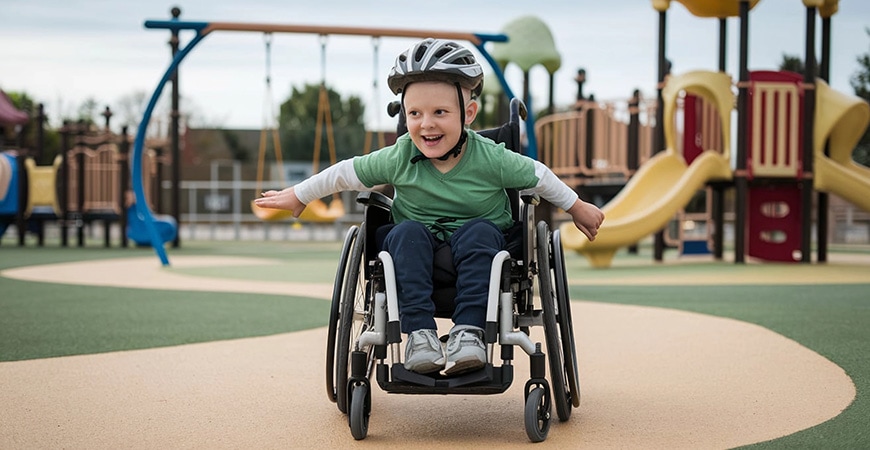
Why pediatric catastrophic injury cases require a developmentally grounded, OT-led life care planning approach to ensure accurate and defensible future care projections.
The Lifelong Impact of Pediatric Catastrophic Injuries and the Role of OT-Led Life Care Planning
Key Insight
Pediatric life care planning differs from adult cases because future care needs must account for growth, developmental transitions, and evolving functional expectations across the lifespan.
When catastrophic injuries occur during infancy or childhood, the resulting medical, functional, and financial consequences extend across an entire lifetime. Pediatric catastrophic injury cases require a fundamentally different life care planning approach than adult-onset injuries, as growth, development, environmental transitions, and evolving functional expectations dramatically influence future care needs and costs.
Catastrophic Injuries in Childhood: Lifelong Implications
When catastrophic injuries—such as spinal cord injury, brain injury, brachial plexus birth palsy, or limb loss—occur during the perinatal period or childhood, their consequences are profound and enduring. These injuries affect not only the child but also their family system, resulting in lifelong challenges related to health, independence, participation, and quality of life. Outcomes are not static; they evolve over time in response to physical growth, cognitive and psychosocial development, environmental demands, and changing societal expectations.
Consider, for example, a child with a spinal cord injury. Over the course of development, this child may:
- Transition from walking with full-time orthoses to wheelchair use in adolescence to improve efficiency and peer participation
- Remain free of pressure injuries in early childhood, with increased risk emerging during adolescence as adherence to pressure relief declines
- Require different mobility systems across developmental stages (e.g., power mobility in preschool, manual mobility in elementary school, power-assist or advanced seating in adolescence)
- Need frequent wheelchair and orthotic modifications due to growth and progressive neuromuscular scoliosis
- Lose independence with floor transfers as body size and weight increase
- Function independently in a roll-in shower at home but encounter accessibility barriers in college or community housing
Litigation Considerations in Pediatric Catastrophic Injury Cases
When pediatric catastrophic injuries become the subject of litigation, the implications extend well beyond immediate medical care. These cases involve lifelong disability, secondary medical complications, repeated medical interventions, escalating future medical costs, vocational and avocational limitations, risk of premature aging, and long-term impacts on independence and quality of life.
Pediatric cases benefit from expert involvement that:
- Is grounded in child development and family systems
- Understands how disability interacts with growth and maturation
- Evaluates real-world environments where children and adolescents live, learn, and socialize
- Anticipates adult outcomes for individuals injured in childhood
- Understands both surgical and non-surgical interventions and their role in long-term functional outcomes
The Role of an Occupational Therapist Certified Life Care Planner
From a litigation perspective, pediatric life care planning must move beyond diagnosis-based projections to anticipate how injury interacts with development, function, environment, and evolving adult roles over time.
An occupational therapist certified life care planner translates medical diagnoses—impairments in body functions and structures—into practical implications for function, independence, and lifetime financial impact. Pediatric life care plans are contextualized within a developmental framework and address anticipated changes across the lifespan, including:
Functional Assessment
- Movement, strength, sensation, endurance, and cognition
- Impact on developmentally expected play, school participation, socialization, and daily activities
- Activity analysis addressing energy conservation, adaptive strategies, compensatory techniques, and temporal demands
- Fluctuations in function related to growth and secondary complications
Environmental Assessment
- Home accessibility and safety across changing environments over the lifespan
- Impact on family roles, routines, and habits
- Parental needs, supports, and coping strategies
Equipment and Adaptive Solutions
- Orthoses, prostheses, and static or dynamic splints
- Wheelchair and seating systems, medical strollers, and vehicle seating
- Durable medical equipment such as beds, lifts, bath systems, and ramps
- Adaptive technologies supporting mobility, communication, safety, and daily activities
Future Forecast Into Adulthood
- Driver evaluation and training
- Vocational potential and workplace accommodations
- Health care self-management and consumer skills
- Avocational interests and community participation
- Independent living and adult relationships
- Parenting considerations
- Premature aging and secondary health risks
The result is a life care plan that is clinically accurate, developmentally responsive, and defensible.
Case Example: Pediatric Spinal Cord Injury
The following example illustrates why pediatric life care planning requires specialized expertise and cannot rely on adult-based assumptions or static care models.
A two-year-old child sustained a mid-level cervical spinal cord injury in a pedestrian–motor vehicle collision. At four years of age, she presents with tetraplegia and neurogenic bowel and bladder. Life care planning questions uniquely relevant to this pediatric case include:
- What secondary complications are likely to emerge as the child grows, and how frequently will they require treatment?
- How will secondary conditions affect long-term function and independence?
- At what frequency will mobility equipment and orthoses require replacement or modification due to growth?
- How will mobility needs evolve across developmental stages?
- At what age should bowel and bladder management skills be taught, and what services are required?
- How will injury affect sexuality, relationships, and future family planning?
- What services support age-appropriate roles, routines, and social participation?
- How will injury affect independent living, driving, community mobility, and employment?
- What services mitigate premature aging?
- What supports do parents require to sustain long-term caregiving?
Meet Our Expert
Mary Jane Mulcahey, PhD, OTR/L, FASIA, CLCP
Board-Certified Occupational Therapist | Certified Life Care Planner

Dr. Mulcahey has over 30 years of clinical and research experience with children and adults with catastrophic injuries. She is Program Director and Lead Faculty for the Graduate Certificate in Life Care Planning at Thomas Jefferson University in Philadelphia. Recognized internationally for her expertise in pediatric and adult spinal cord injury and pediatric chronic conditions, Dr. Mulcahey is a past president of the American Spinal Injury Association and former Chair of the Board of Directors of the Steel Assembly for pediatric SCI – Pediatric Spinal Cord Injury Program and the American Occupational Therapy Foundation.
Her extensive clinical experience, scholarly work, and interdisciplinary collaboration inform the development of life care plans that are evidence-based, practical, developmentally grounded, and defensible.
Have a pediatric catastrophic injury case? Early involvement of a pediatric-trained occupational therapist certified life care planner helps ensure future care projections are clinically accurate and defensible. Contact Turning Point Life Care Planning to discuss expert support.
